
JointsMeasuredinMicrons.ReliabilityMeasuredinMillionsofCycles.
Resistance Welding
Servo-force · ISO 14327 · 100% pull-test
Laser Soldering
1,070 nm fiber · 50 μm spot · in-situ thermal
Thermocompression
±0.003 mm · N₂ purge · vision-aligned
Hermetic Sealing
He fine-leak < 1×10⁻⁸ · MIL-STD-883
Engineering Challenge
A wearable sensor manufacturer needed copper flex-circuit terminations under 80μm pad pitch — conventional reflow was lifting pads on every third panel, driving 31% scrap rates and delaying FDA 510(k) submission by six months.
Fuse Process
Thermocompression bonding with heated capillary tool at 280°C / 0.8 N force, nitrogen purge blanket, and closed-loop vision alignment to ±0.003 mm. Each joint thermally profiled in-situ; out-of-spec bonds flagged and reworked before panel release.

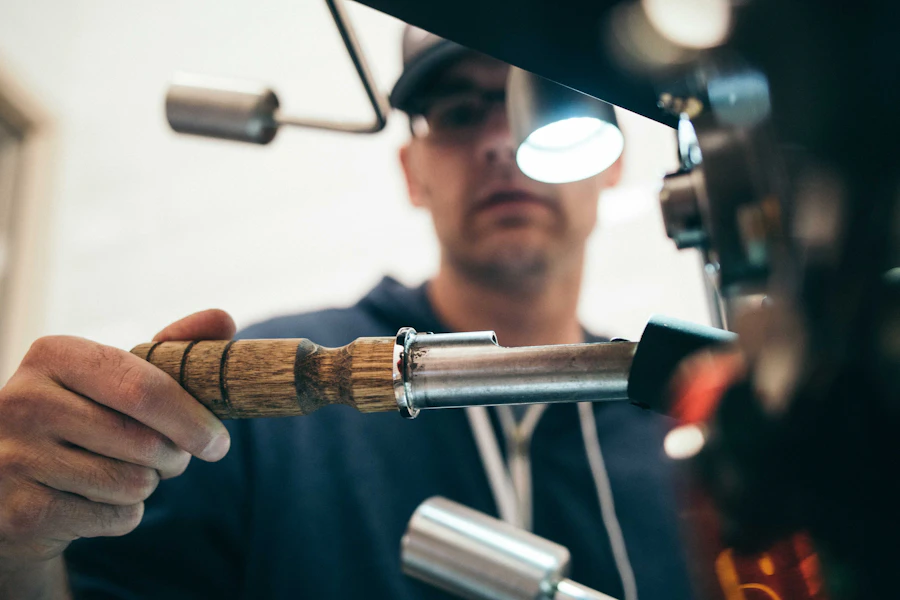
Engineering Challenge
A Tier 1 battery supplier scaling 48V mild-hybrid tab connections needed 4.2 million welds per year at < 0.8% resistance variation, with full traceability per IATF 16949. Ultrasonic bonding on the previous line was producing cold joints at temperature extremes during winter qualification testing.
Fuse Process
Resistance spot welding with servo-controlled electrode force (1,200–1,800 N), real-time weld energy monitoring per ISO 14327, and 100% pull-force sampling at 3-sigma control limits. Each weld record — energy, force, displacement, resistance — written to the production MES within 200 ms of arc extinction.
Engineering Challenge
A cardiac rhythm management OEM required hermetic laser-welded titanium can closures meeting MIL-STD-883 fine-leak at < 1×10⁻⁸ atm·cc/s. Prior vendor's Nd:YAG process produced micro-porosity at the weld toe, failing helium leak tests at a 6% rate — unacceptable for a Class III implantable.
Fuse Process
Fiber laser welding in ISO Class 5 cleanroom at 1,070 nm / 200 W peak, 50 μm spot, 2 m/s travel speed with oscillation pattern to eliminate porosity nucleation sites. 100% He fine-leak per MIL-STD-883 Method 1014, radiographic inspection per ASTM E1742, and full first-article documentation package per FDA 21 CFR Part 820.

Submit Your
Joint Challenge.
Tell us your materials, tolerances, and volumes. A weld engineer reviews every submission — you'll have a capability assessment within one business day, not a sales call.
Certified To